






“The NTUiTiV Difference” – This is Why This Course is Right for You
- Special Discounted Price of US$3,950 – the usual price is US$4,950
- Satisfaction Guaranteed – or we will give you your money back!
- 15% Early-bird Discount – for the first 3 people to register for any course
- 20% Group Discount – if you come with one or more colleagues
- No More Than 12 Delegates on the course – guaranteed
See our homepage for more detailed information about these NTUiTiV Differences.
Innovate with impact—turn empathy into exceptional solutions.
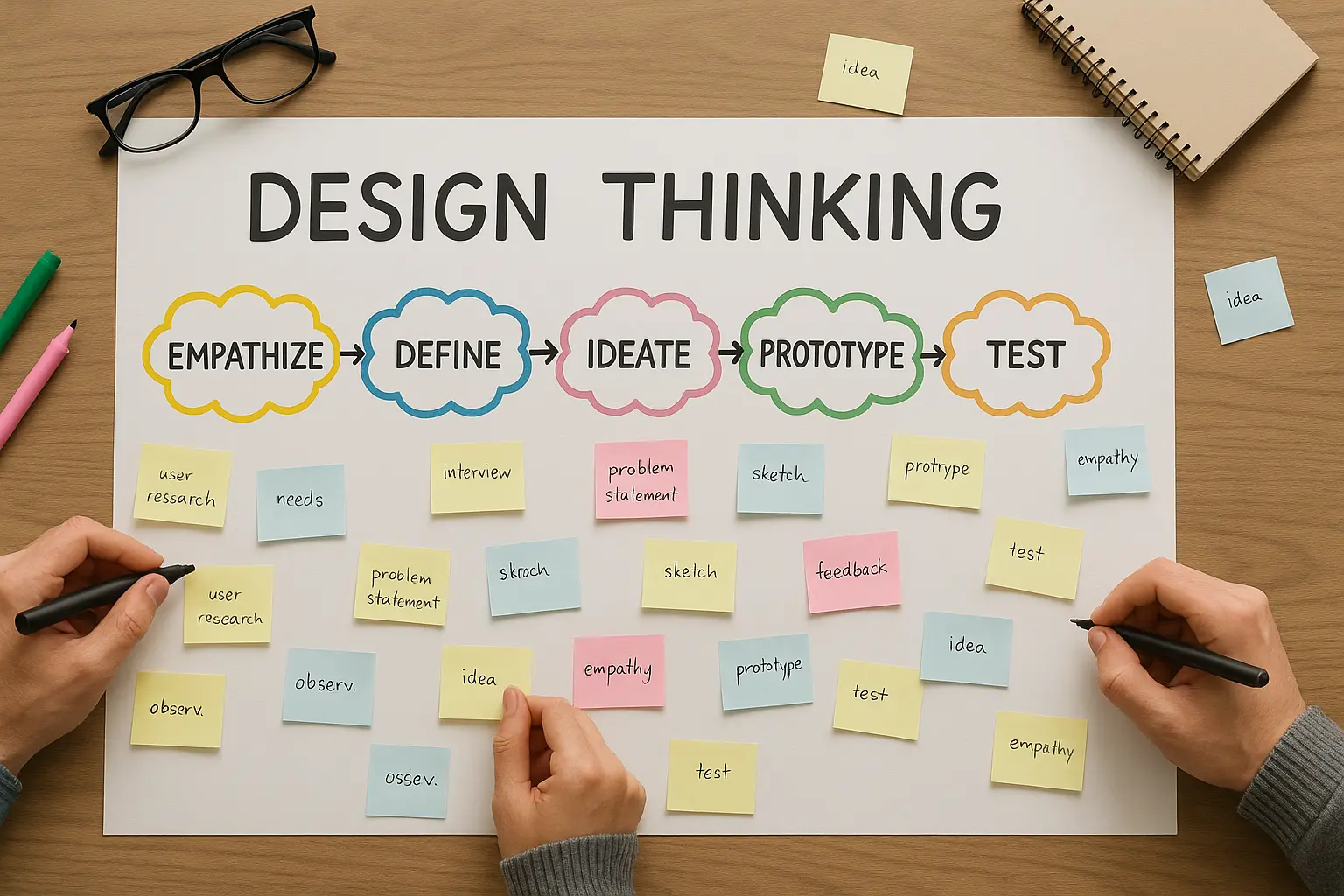
This engaging 5-day course immerses participants in the full Design Thinking cycle—from empathising and defining problems to ideating, prototyping, testing, and scaling solutions. Through structured frameworks, real-world case studies, creative labs, and collaboration, you’ll gain a transformative toolkit for solving complex challenges with user-centered precision.
Why this course is important
-
Structured creativity drives real innovation: Design Thinking turns ambiguity into opportunity and aligns solutions with real user needs.
-
Solving people-centered problems: Empathy-led approaches ensure products and services resonate deeply with those they serve.
-
Embedding innovation in everyday work: With regular experimentation and prototyping, innovation becomes process, not exception.
Who should attend
-
Product managers, service designers, and innovation leads seeking human-centred methodologies
-
UX professionals, digital strategists, and experience architects focused on customer-first design
-
Team leaders, entrepreneurs, and consultants solving cross-functional or complex challenges
-
Transformation, R&D, marketing, and HR professionals aiming to embed continuous innovation in their teams
What you will learn
Over five dynamic days, participants will:
-
Adopt a Design Thinking mindset – Understand its principles, stages, and power in problem solving
-
Conduct deep user research – Use interviews, observation, and empathy mapping to uncover genuine needs
-
Frame meaningful opportunities – Build affinity maps and clear problem statements to guide innovation
-
Generate creative concepts – Apply SCAMPER, analogies, and structured ideation to spark breakthrough ideas
-
Prototype rapidly – Develop low- and mid-fidelity prototypes to test and iterate concepts quickly
-
Test with users – Run user tests, gather insights, and refine solutions based on feedback
-
Foster an experimentation culture – Learn hypothesis-based iteration for continuous improvement
-
Scale innovation practices – Embed rituals and routines that sustain creative teams long term