







“The NTUiTiV Difference” – This is Why This Course is Right for You
- Satisfaction Guaranteed – or we will give you your money back!
- 15% Early-bird Discount – for the first 3 people to register for any course
- 20% Group Discount – if you come with one or more colleagues
- No More Than 12 Delegates on the course – guaranteed
See our homepage for more detailed information about these NTUiTiV Differences.
Developing Safety-Critical Software for the Railway Industry
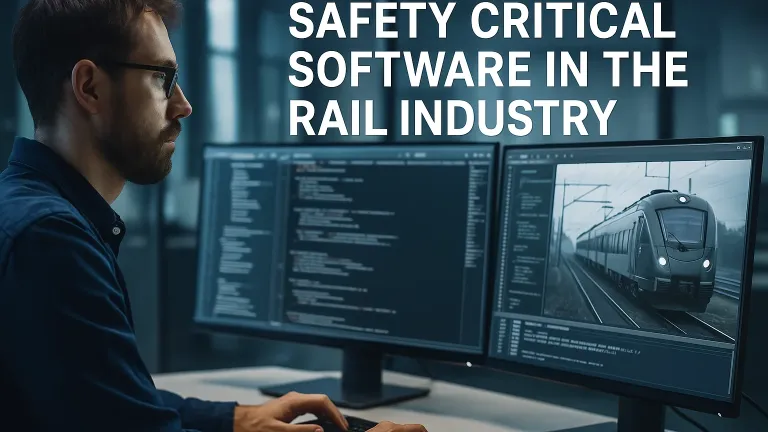
As railway systems become increasingly software-dependent, the ability to develop, test, and assure safety-critical software has become essential. This immersive 5-day training programme provides professionals with a detailed understanding of safety-critical software development and testing in the railway context, fully updated to reflect the publication of EN 50716:2023.
From the fundamentals of the software safety lifecycle and its alignment with EN 50126 and EN 50129, through to SIL assignment, architecture, design techniques, and validation, this course gives participants the knowledge to develop compliant, reliable software for safety-related railway systems. Supported by real-world case studies of software failures and hands-on exercises, participants will explore how to apply EN 50716 requirements across all SIL levels — from requirements specification through to documentation, maintenance, and emerging practices including agile methodologies and cybersecurity.
Why This Course Is Important
Software now sits at the heart of virtually every safety-critical railway system, from signalling and train control to rolling stock and infrastructure monitoring. When software fails in these environments, the consequences can be severe — as demonstrated by a number of well-documented railway incidents caused by software errors and inadequate safety management.
EN 50716:2023 replaces EN 50128 as the definitive standard for railway safety-critical software development, introducing updated requirements that professionals must understand and apply. This course equips attendees with the practical knowledge to work confidently within this framework, bridging the gap between standards compliance and real-world software engineering practice in safety-critical rail environments.
Who Should Attend
This course is designed for professionals involved in the development, testing, assessment, and management of software in railway safety-critical systems, including:
- Software developers and engineers working on safety-related railway projects
- Railway safety assessors and safety professionals
- IT professionals and resilience specialists in transport systems
- Railway business leaders and managers with software project oversight
- Railway inspectors and legislators
- Safety planners and quality assurance professionals
What You Will Learn
Participants will gain practical knowledge and competencies for:
- Understanding the scope, structure, and key requirements of EN 50716:2023 and its relationship to EN 50126 and EN 50129
- Assigning and applying Software Safety Integrity Levels (SIL) using EN 50126 principles
- Developing software requirements, architecture, and design in accordance with SIL-specific techniques and methods
- Applying verification, validation, and testing techniques for safety-critical software
- Understanding certification requirements for development and testing tools
- Integrating software with hardware in safety-critical systems and managing lifecycle maintenance
- Analysing real-world case studies of railway accidents involving software failures and deriving risk mitigation strategies
- Understanding documentation, traceability, and software quality assurance reporting requirements
- Comparing agile and waterfall methodologies in a safety-critical context
- Incorporating cybersecurity measures into safety-critical software development