
Article
Immersive Computing
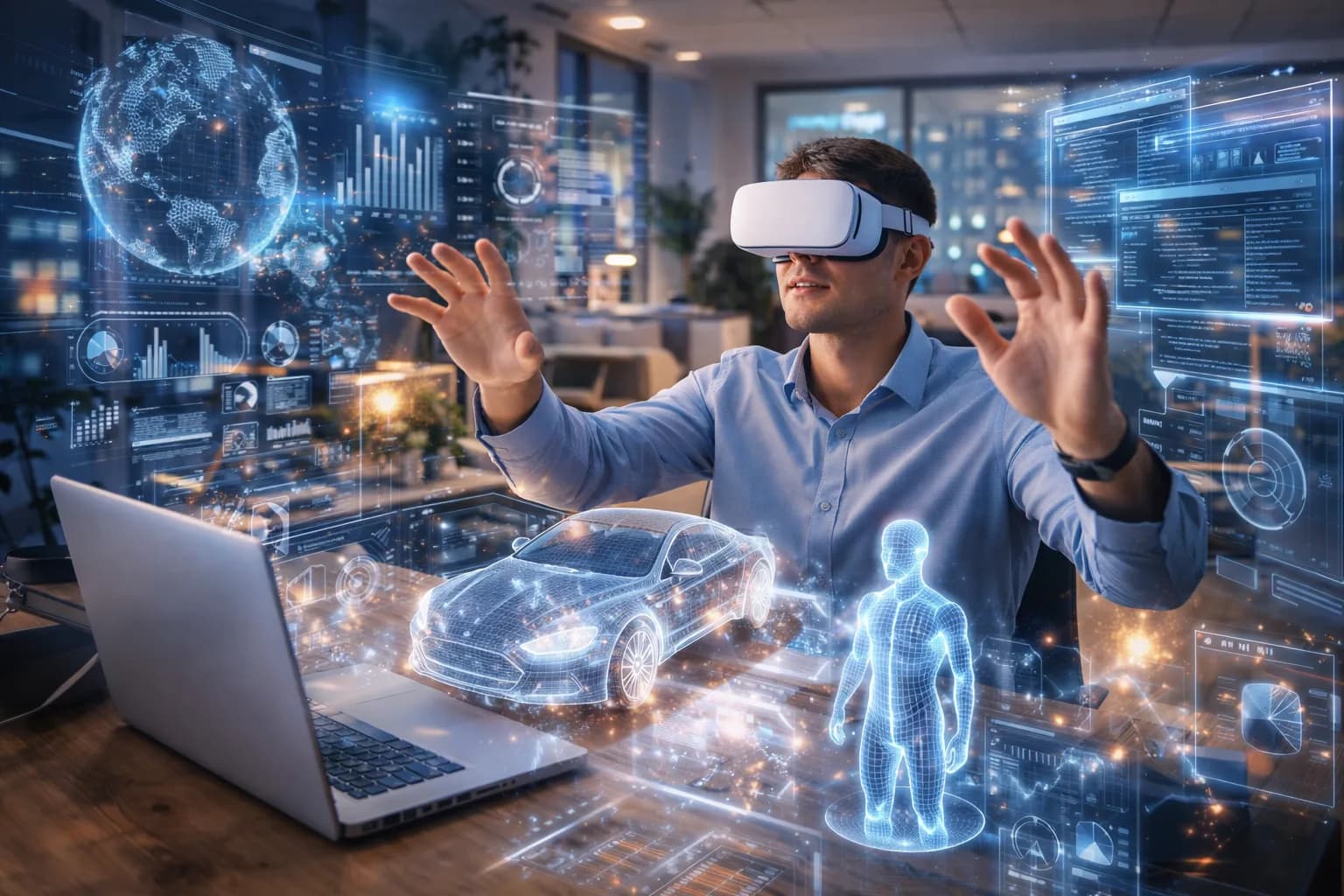
A Deep Dive into Transformative Technology
Introduction
Immersive computing represents a frontier in technology that blends the digital and physical worlds into a cohesive, interactive experience. By leveraging advancements in augmented reality (AR), virtual reality (VR), and mixed reality (MR), immersive computing goes beyond traditional interfaces and seeks to integrate digital content seamlessly into our everyday environments.
The Evolution of Immersive Computing
The journey of immersive computing began with the advent of VR in the 1960s, when the first head-mounted displays were developed. Over the decades, the technology evolved rapidly— from rudimentary graphics and limited interaction capabilities to sophisticated systems offering full-body tracking and high-definition visual experiences. AR emerged in the 1990s, adding another layer to immersive computing by overlaying digital information onto the real world. Key Technologies in Immersive Computing
Virtual Reality (VR)
VR technology immerses users in a fully artificial environment, often requiring headsets that cover the eyes and ears to block out the real world. VR applications span various fields, from gaming and entertainment to education and training. For instance, medical professionals use VR to simulate surgeries, providing trainees with a risk-free, hands-on experience.
Augmented Reality (AR)
Unlike VR, AR enhances the real world by overlaying digital content onto physical environments. AR applications are ubiquitous in our daily lives, from smartphone apps that provide real-time information about our surroundings to AR glasses that offer navigation assistance. Industries such as retail and manufacturing utilize AR for interactive product displays and complex assembly instructions.
Mixed Reality (MR)
MR combines elements of both VR and AR, allowing digital and physical objects to coexist and interact in real time. This technology is crucial for applications requiring a seamless integration of virtual elements within real-world contexts, such as architectural visualization and advanced collaborative workspaces.
Applications of Immersive Computing
Education and Training
Immersive computing has revolutionized education by creating interactive and engaging learning environments. Virtual classrooms, AR-enhanced textbooks, and immersive simulations provide students with hands-on experience and a deeper understanding of complex subjects. In professional training, immersive technologies offer realistic practice scenarios, improving skills and reducing errors.
Healthcare
In healthcare, immersive computing assists in diagnostics, treatment planning, and patient education. VR simulations help surgeons refine their techniques, while AR aids in visualizing complex anatomical structures during procedures. Patients benefit from immersive therapies that manage pain and anxiety through VR-based relaxation techniques. Entertainment and Media The entertainment industry has embraced immersive computing, offering audiences unprecedented experiences. VR gaming transports players into fantastical worlds, while AR applications create interactive and engaging media content. Immersive cinemas and VR concerts provide new ways to enjoy popular culture.
Retail and Marketing
Retailers use immersive computing to enhance customer engagement through virtual try-ons, interactive product demonstrations, and personalized shopping experiences. AR-powered advertisements offer dynamic and captivating content that captivates audiences and drives sales.
Challenges and Opportunities
Technical Limitations
Despite the immense potential, immersive computing faces technical hurdles such as hardware constraints, bandwidth issues, and the need for advanced content creation tools. Overcoming these challenges requires ongoing innovation and collaboration among technology developers, content creators, and industry stakeholders.
Ethical and Privacy Concerns
The integration of digital content into the physical world raises ethical and privacy issues. Ensuring user data protection, preventing digital manipulation, and establishing guidelines for responsible usage are critical for maintaining trust in immersive technologies.
Future Prospects
The future of immersive computing is promising, with advancements in AI, machine learning, and cloud computing driving innovation. As hardware becomes more accessible and software more sophisticated, immersive technologies will integrate further into daily life, transforming how we interact with digital content and the physical world.
Conclusion
Immersive computing is poised to redefine our relationship with technology, offering transformative experiences across various domains. By bridging the gap between the digital and physical realms, immersive technologies have the power to enhance our understanding, improve our skills, and enrich our lives in ways previously unimaginable.