
Article
Oil Terminal Operations
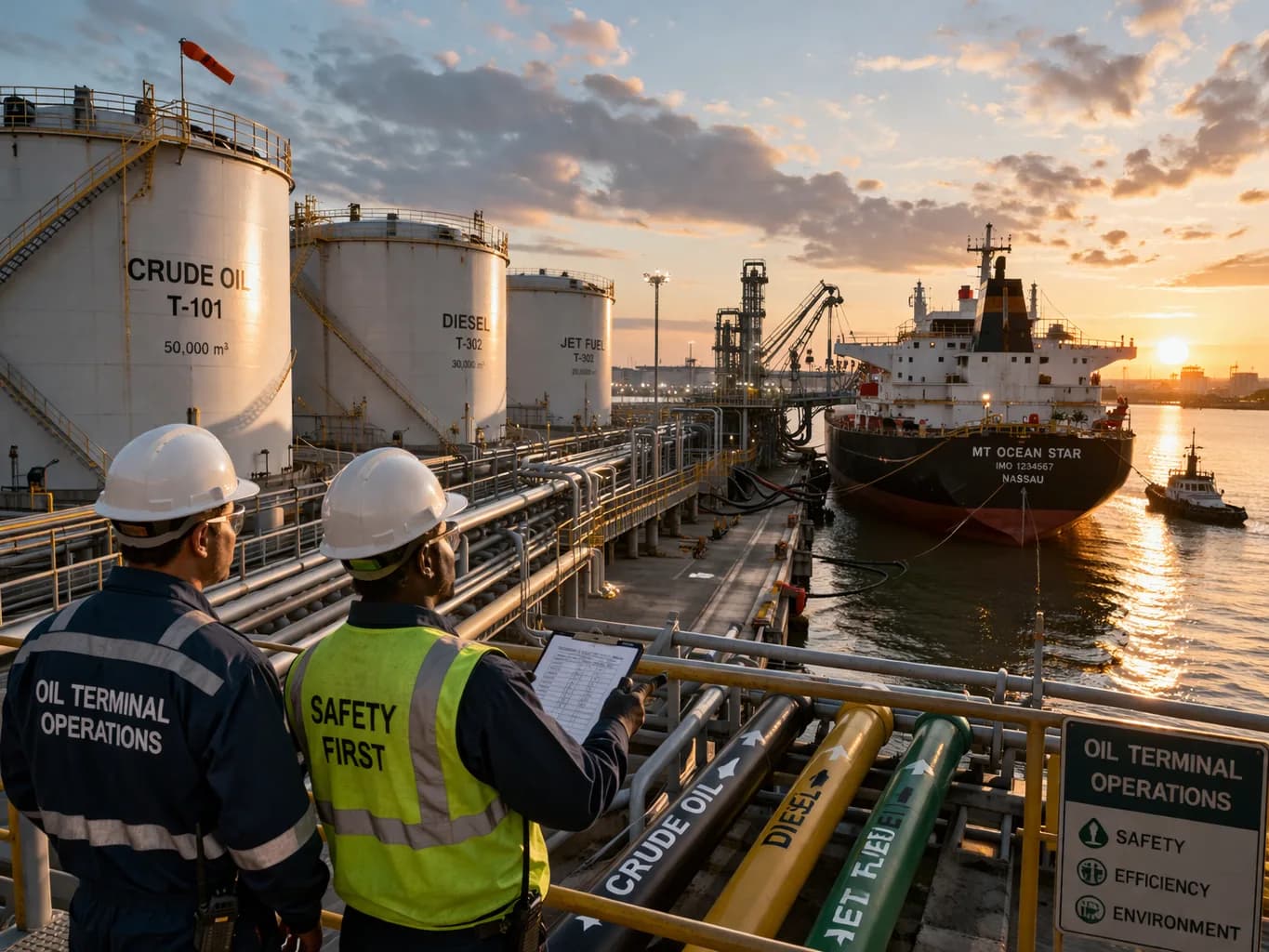
An Insight into the Heart of the Oil Supply Chain
Oil terminal operations are a critical component of the global oil supply chain. These facilities serve as pivotal points for the storage, transfer, and distribution of crude oil and refined petroleum products. Their efficient operation ensures the smooth flow of oil from production sites to refineries and ultimately to consumers. This article delves into the intricate workings of oil terminals, highlighting their key functions, operational procedures, safety measures, and environmental considerations.
Functions of Oil Terminals
Oil terminals, also known as tank farms or depots, perform several essential functions that underpin the oil industry’s logistics. The primary functions include:
Storage
Oil terminals provide extensive storage capacities for crude oil and petroleum products. Large tanks of varying capacities are used to store different types of oil, ensuring a steady supply to meet market demands. The storage of oil at terminals allows for the balancing of supply and demand, helping to stabilize prices and ensure availability.
Transfer
The transfer of oil between different transportation modes, such as ships, pipelines, railcars, and trucks, is a central function of oil terminals. This transfer process involves complex logistics and coordination to ensure that oil is moved efficiently and safely from one mode of transport to another.
Blending
At oil terminals, various grades of crude oil and petroleum products are often blended to meet specific market requirements. Blending ensures that the final product meets quality and regulatory standards, making it suitable for commercial use.
Distribution
Oil terminals act as distribution hubs, facilitating the delivery of oil to refineries, petrochemical plants, and end consumers. This distribution network is essential for maintaining a consistent supply of oil across regions and countries.
Operational Procedures
The operation of oil terminals involves a series of meticulously planned and executed procedures. These procedures ensure the safe and efficient handling of oil, minimizing the risk of accidents and environmental hazards.
Receipt and Dispatch
Receiving and dispatching oil is a crucial aspect of terminal operations. Oil is received from various sources, such as tankers, pipelines, or railcars, and stored in designated tanks. The dispatch process involves loading oil onto different transportation modes for onward delivery. Advanced automation and control systems are used to monitor and manage these processes, ensuring accuracy and safety.
Tank Management
Effective tank management is vital for optimizing storage capacity and maintaining the quality of stored oil. This includes regular inspection, cleaning, and maintenance of tanks to prevent contamination and ensure structural integrity. Tank levels and temperatures are continuously monitored to detect any anomalies that could indicate potential issues.
Quality Control
Maintaining the quality of oil products is paramount in terminal operations. Samples are regularly taken and analyzed to ensure that the oil meets specified standards. Quality control measures also involve monitoring for the presence of impurities, water, or other contaminants that could affect the oil’s performance.
Safety Protocols
Safety is a top priority in oil terminal operations. Comprehensive safety protocols are implemented to protect personnel, equipment, and the environment. These protocols include emergency response plans, fire prevention measures, and regular safety drills. Personnel are trained to handle hazardous materials and operate equipment safely, reducing the risk of accidents.
Environmental Considerations
Oil terminal operations have significant environmental impacts, necessitating robust measures to mitigate potential harm. Environmental considerations encompass a range of practices aimed at minimizing the ecological footprint of terminal activities.
Spill Prevention and Response
Preventing oil spills is a critical aspect of environmental management at oil terminals. Spill prevention measures include the use of containment systems, such as bunds and booms, and regular inspection of equipment and infrastructure. In the event of a spill, prompt response actions are essential to contain and clean up the spill, minimizing environmental damage.
Air Quality Management
Oil terminals can be sources of air pollution due to the emission of volatile organic compounds (VOCs) and other pollutants. Air quality management practices include the installation of vapor recovery systems, regular monitoring of emissions, and adherence to regulatory standards. These measures help to reduce the release of harmful substances into the atmosphere.
Water Management
The management of water resources is another critical environmental consideration. Terminal operations involve the use of water for cooling, cleaning, and other processes. Proper treatment and disposal of wastewater are essential to prevent contamination of local water bodies. Stormwater management systems are also implemented to control runoff and prevent the spread of pollutants.
Sustainable Practices
Many oil terminals are adopting sustainable practices to reduce their environmental impact. These practices include the use of renewable energy sources, such as solar or wind power, to reduce reliance on fossil fuels. Energy-efficient technologies and processes are also being implemented to minimize energy consumption and greenhouse gas emissions.
Technological Advancements
Advancements in technology are driving improvements in oil terminal operations. Automation, digitalization, and the Internet of Things (IoT) are transforming the way terminals are managed and operated.
Automation and Control Systems
Automation plays a crucial role in enhancing the efficiency and safety of terminal operations. Automated systems are used to monitor and control various processes, such as tank levels, flow rates, and temperature. These systems provide real-time data and alerts, enabling operators to make informed decisions and respond quickly to any issues.
Digitalization
Digitalization is revolutionizing terminal operations by improving data management and analysis. Digital tools and platforms enable the collection, storage, and analysis of vast amounts of data, providing valuable insights into operational performance. This data-driven approach helps to optimize processes, reduce costs, and improve overall efficiency.
Internet of Things (IoT)
The IoT is increasingly being integrated into terminal operations to enhance connectivity and communication. IoT devices and sensors are used to monitor equipment and infrastructure, providing real-time data on their condition and performance. This connectivity enables predictive maintenance, reducing the risk of equipment failure and downtime.
Challenges and Future Outlook
Despite the advancements and improvements in oil terminal operations, the industry faces several challenges. These include regulatory compliance, environmental concerns, and the need for ongoing investment in infrastructure and technology. Regulatory Compliance Oil terminals must adhere to stringent regulatory standards to ensure the safety and environmental sustainability of their operations. Compliance with these regulations requires continuous monitoring, reporting, and investment in new technologies and practices.
Environmental Concerns
The environmental impact of oil terminal operations remains a significant concern. The industry must continue to develop and implement measures to minimize pollution, reduce greenhouse gas emissions, and protect local ecosystems.
Investment in Infrastructure
Ongoing investment in infrastructure and technology is essential to maintain the efficiency and safety of terminal operations. This includes upgrading existing facilities, building new storage capacities, and adopting innovative technologies to enhance performance.
Future Outlook
The future of oil terminal operations will be shaped by several factors, including technological advancements, regulatory developments, and environmental considerations. The industry is likely to see increased adoption of automation, digitalization, and sustainable practices, driving improvements in efficiency, safety, and environmental performance. As the global energy landscape evolves, oil terminals will continue to play a vital role in ensuring the reliable supply of oil to meet growing demand.