
Article
The Phenomenon of Urbanisation
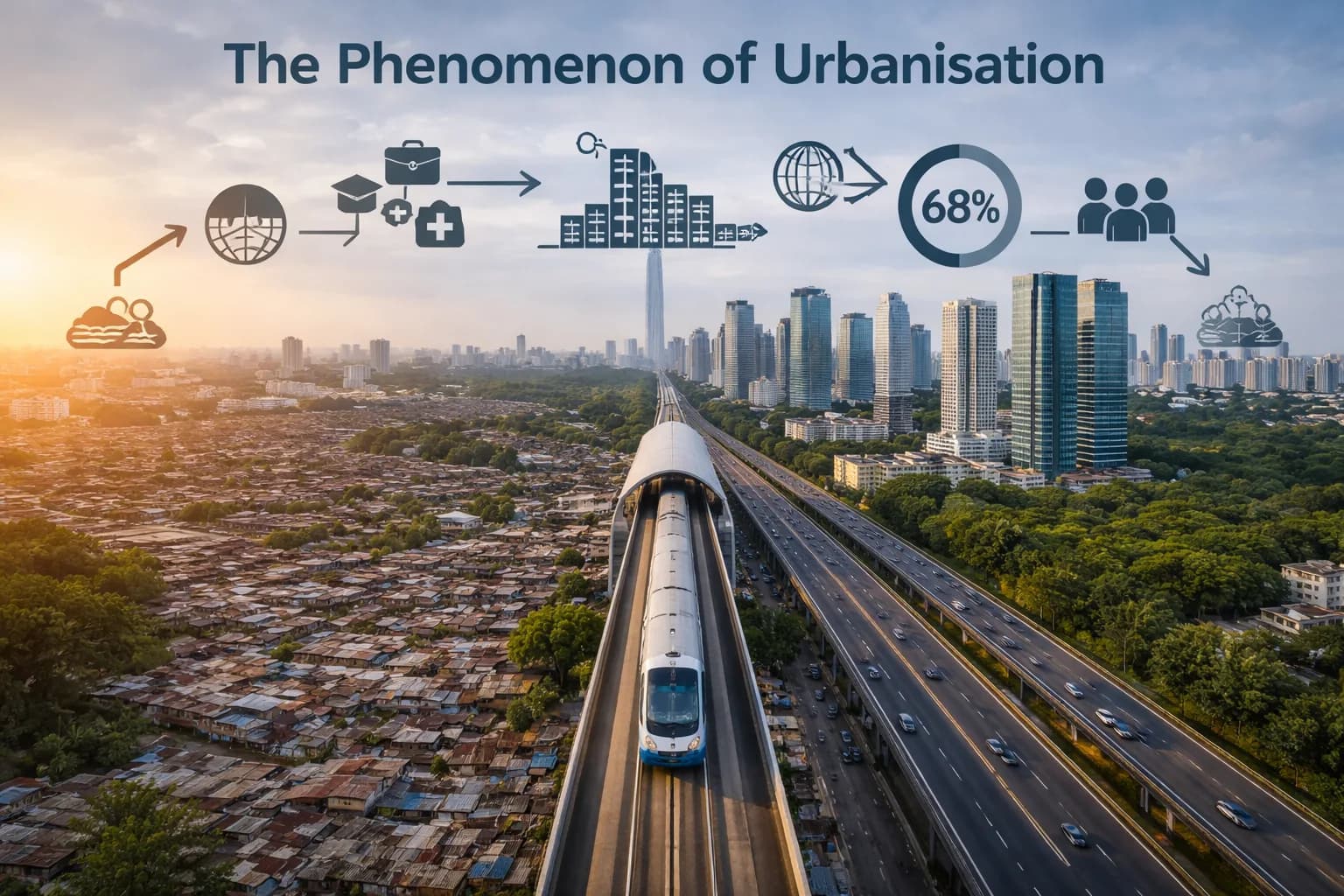
The Transformation of Human Settlements
Urbanisation, the process by which an increasing percentage of a population comes to live in cities and urban areas, has been one of the most significant global trends over the past century. This transformation is driven by various factors, including economic opportunities, improved living standards, and the promise of better social services. As urbanisation continues to reshape human settlements, it brings both opportunities and challenges that must be addressed carefully.
The Historical Context of Urbanisation
Urbanisation is not a new phenomenon. It dates back to ancient civilizations where cities like Babylon, Athens, and Rome served as cultural, economic, and administrative hubs. However, modern urbanisation began with the Industrial Revolution in the 18th and 19th centuries, which led to massive migrations from rural to urban areas. The development of industries created numerous jobs, attracting people seeking better employment opportunities and living conditions.
The Causes of Urbanisation
Several factors contribute to urbanisation:
• Economic Opportunities: Cities often provide better job prospects, higher wages, and diverse career opportunities, drawing people from rural areas. • Education: Urban areas offer better educational facilities, including schools, colleges, and universities, which attract families seeking quality education for their children. • Healthcare: Improved healthcare services in urban areas provide better medical care and access to specialized treatments, encouraging people to move to cities. • Infrastructure: Well-developed infrastructure, including transportation, communication, and utilities, makes urban living more convenient and attractive. • Social Services: Access to various social services, such as entertainment, shopping, and cultural activities, enhances the quality of life in urban areas.
The Impact of Urbanisation
Urbanisation has profound impacts on various aspects of society and the environment:
Economic Impact
Urban areas are often the engines of economic growth. They generate a significant portion of a country’s GDP through industries, services, and commerce. The concentration of businesses, innovation, and talent in cities fosters economic development and competitiveness. However, this economic boom can also lead to disparities and inequality, with wealth concentrated in urban centers while rural areas may lag behind.
Social Impact
Urbanisation alters social structures and lifestyles. It promotes cultural diversity as people from different backgrounds converge in cities, leading to the exchange of ideas and cultural practices. However, it can also result in social challenges, such as overcrowding, crime, and the breakdown of traditional community bonds. Ensuring social cohesion and inclusivity in urban areas is essential for sustainable development.
Environmental Impact
The environmental consequences of urbanisation are significant. The construction of cities involves deforestation, land reclamation, and the alteration of natural landscapes. Urban areas generate substantial waste and pollution, contributing to climate change and environmental degradation. Sustainable urban planning and green initiatives are crucial to mitigating these adverse effects.
Infrastructure and Housing
The rapid growth of urban populations places immense pressure on infrastructure and housing. Cities must expand their transportation networks, water supply, sewage systems, and energy resources to accommodate the increasing number of residents. Affordable housing is a critical issue, as the demand often outstrips supply, leading to the proliferation of informal settlements and slums.
Sustainable Urban Development
To address the challenges of urbanisation, sustainable urban development practices are essential. These practices aim to create cities that are livable, inclusive, environmentally friendly, and economically vibrant:
Smart Cities
The concept of smart cities involves using technology and data to improve urban living. Smart cities integrate information and communication technologies (ICT) to enhance the efficiency of services, reduce resource consumption, and improve the quality of life for residents. Examples include smart grids, intelligent transportation systems, and digital governance platforms.
Green Urban Planning
Incorporating green spaces and sustainable design principles into urban planning can significantly reduce the environmental impact of cities. Green roofs, urban parks, and sustainable buildings help mitigate the heat island effect, improve air quality, and enhance biodiversity. Urban agriculture and community gardens can also contribute to food security and environmental sustainability.
Inclusive Urban Policies
Ensuring that urban development benefits all segments of society is crucial. Inclusive urban policies focus on providing affordable housing, accessible healthcare, quality education, and equal employment opportunities. Participatory governance, where residents are involved in decision-making processes, helps create more equitable and resilient cities.
The Future of Urbanisation
As urbanisation continues to shape the future, it presents both opportunities and challenges. By 2050, it is estimated that nearly 70% of the world’s population will live in urban areas. This demographic shift requires innovative solutions to manage urban growth sustainably.
Resilient Cities
Resilient cities are those that can withstand and recover from various shocks and stresses, such as natural disasters, economic crises, and pandemics. Building resilience involves investing in robust infrastructure, emergency preparedness, and adaptive governance. Cities must also address vulnerabilities related to climate change, such as rising sea levels and extreme weather events.
Global Collaboration
Addressing the challenges of urbanisation requires global collaboration and knowledge sharing. Cities can learn from each other’s experiences and best practices to develop effective urban policies. International organizations, such as the United Nations, play a vital role in promoting sustainable urban development through initiatives like the Sustainable Development Goals (SDGs).
In conclusion, urbanisation is a complex and dynamic process that has transformed human settlements and societies. While it brings economic growth, cultural diversity, and improved living standards, it also poses significant challenges that require careful management. By embracing sustainable urban development practices, cities can become more livable, equitable, and resilient, ensuring a better future for all.