
Article
The Process of Complex Problem Solving
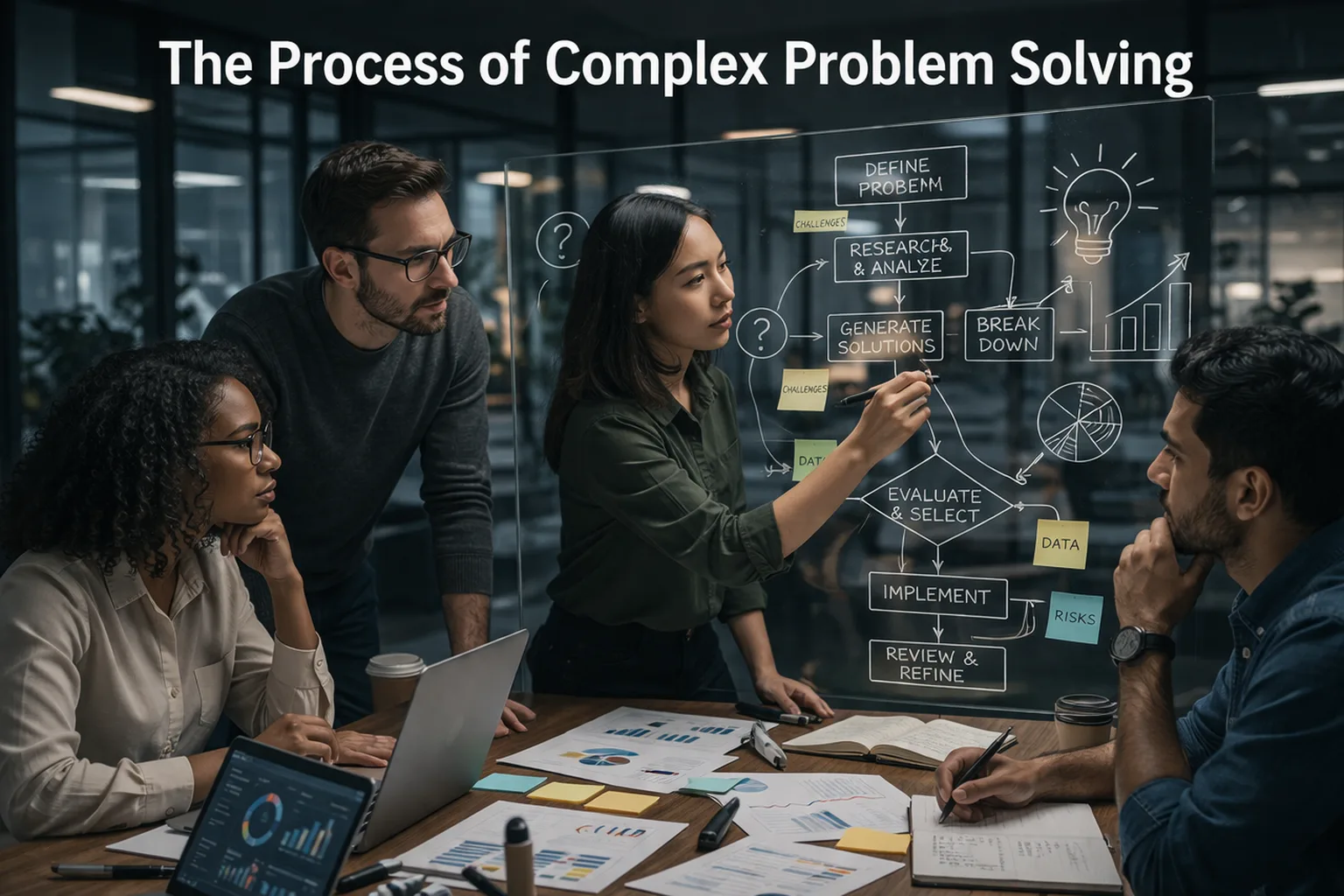
An Explorative Journey into Cognitive Strategies
Complex problem solving is an intricate and multifaceted process that requires a combination of cognitive skills, creative thinking, and systematic planning. It encompasses a range of scenarios, from scientific research and engineering challenges to social issues and personal dilemmas. The journey from identifying a problem to arriving at a solution is seldom linear; it is often iterative and dynamic. This article delves into the stages of complex problem solving, offering insights into the cognitive strategies that facilitate effective resolution.
Identifying the Problem
The first step in any problem-solving process is to accurately identify and define the problem. This stage involves recognizing that a problem exists, understanding its nature, and framing it in a way that makes it manageable. During this phase, it is crucial to gather relevant information, seek different perspectives, and ensure that the problem is clearly articulated. Inadequate problem definition can lead to misguided efforts and suboptimal solutions.
Generating Possible Solutions
Once the problem is clearly defined, the next step is to generate a range of possible solutions. This stage is characterized by brainstorming and divergent thinking, where creativity plays a pivotal role. It is essential to encourage open-mindedness and to consider a variety of approaches, even those that may initially seem unconventional. The goal is to create an extensive list of potential solutions without prematurely evaluating or dismissing any ideas.
Evaluating and Selecting Solutions
With a myriad of potential solutions on hand, the process moves to evaluating and selecting the most viable options. This involves critical thinking and analytical skills to assess the pros and cons of each solution. Factors such as feasibility, cost, time, resources, and potential risks must be considered. Decision-making tools, such as cost-benefit analysis, SWOT analysis (Strengths, Weaknesses, Opportunities, Threats), and decision matrices, can aid in this process. The objective is to narrow down the options to the most promising ones.
Implementing the Solution
After selecting the best solution, the next step is implementation. This stage requires detailed planning and coordination. It involves delineating the steps necessary to execute the solution, allocating resources, assigning responsibilities, and setting timelines. Effective communication and collaboration are vital to ensure that everyone involved is on the same page and that the implementation proceeds smoothly. Additionally, flexibility is important, as unforeseen challenges may arise that necessitate adjustments to the plan.
Monitoring and Reviewing
Once a solution is implemented, it is crucial to monitor its progress and evaluate its effectiveness. This involves tracking performance metrics, gathering feedback, and assessing whether the solution is achieving the desired outcomes. If the solution is not working as expected, it may be necessary to revisit earlier stages of the problem-solving process to refine or modify the approach. Continuous monitoring ensures that any issues are promptly addressed and that the solution remains effective over time.
Reflecting and Learning
The final stage of complex problem solving is reflection and learning. After the problem has been resolved, it is valuable to reflect on the entire process to identify what worked well and what could be improved. This stage involves documenting lessons learned, celebrating successes, and recognizing areas for growth. The insights gained from this reflection can enhance future problem-solving efforts and contribute to personal and organizational development.
Cognitive Strategies in Problem Solving
Throughout the problem-solving process, various cognitive strategies can enhance effectiveness. These include:
Systems Thinking
Systems thinking involves understanding the problem as part of a larger system and recognizing the interconnections between different elements. This approach helps in identifying root causes and potential ripple effects of solutions.
Analytical Thinking
Analytical thinking entails breaking down the problem into smaller, more manageable components. It enables a detailed examination of each aspect of the problem and facilitates thorough evaluation of potential solutions.
Creative Thinking
Creative thinking fosters innovation and encourages the exploration of novel ideas. It involves thinking outside the box and challenging conventional assumptions to discover unique approaches to problem-solving.
Critical Thinking
Critical thinking involves evaluating information and arguments systematically and objectively. It helps in discerning biases, identifying logical fallacies, and making informed decisions based on evidence.
Collaborative Thinking
Collaborative thinking emphasizes the importance of teamwork and leveraging diverse perspectives. It involves working with others to co-create solutions and harness collective intelligence.
Conclusion
Complex problem solving is an essential skill in today’s rapidly changing world. It requires a blend of cognitive abilities, creativity, and systematic planning. By following a structured process and employing effective cognitive strategies, individuals and organizations can navigate complex challenges and devise innovative solutions. Whether in scientific research, engineering, business, or everyday life, the ability to solve complex problems is a valuable asset that drives progress and success.