
Article
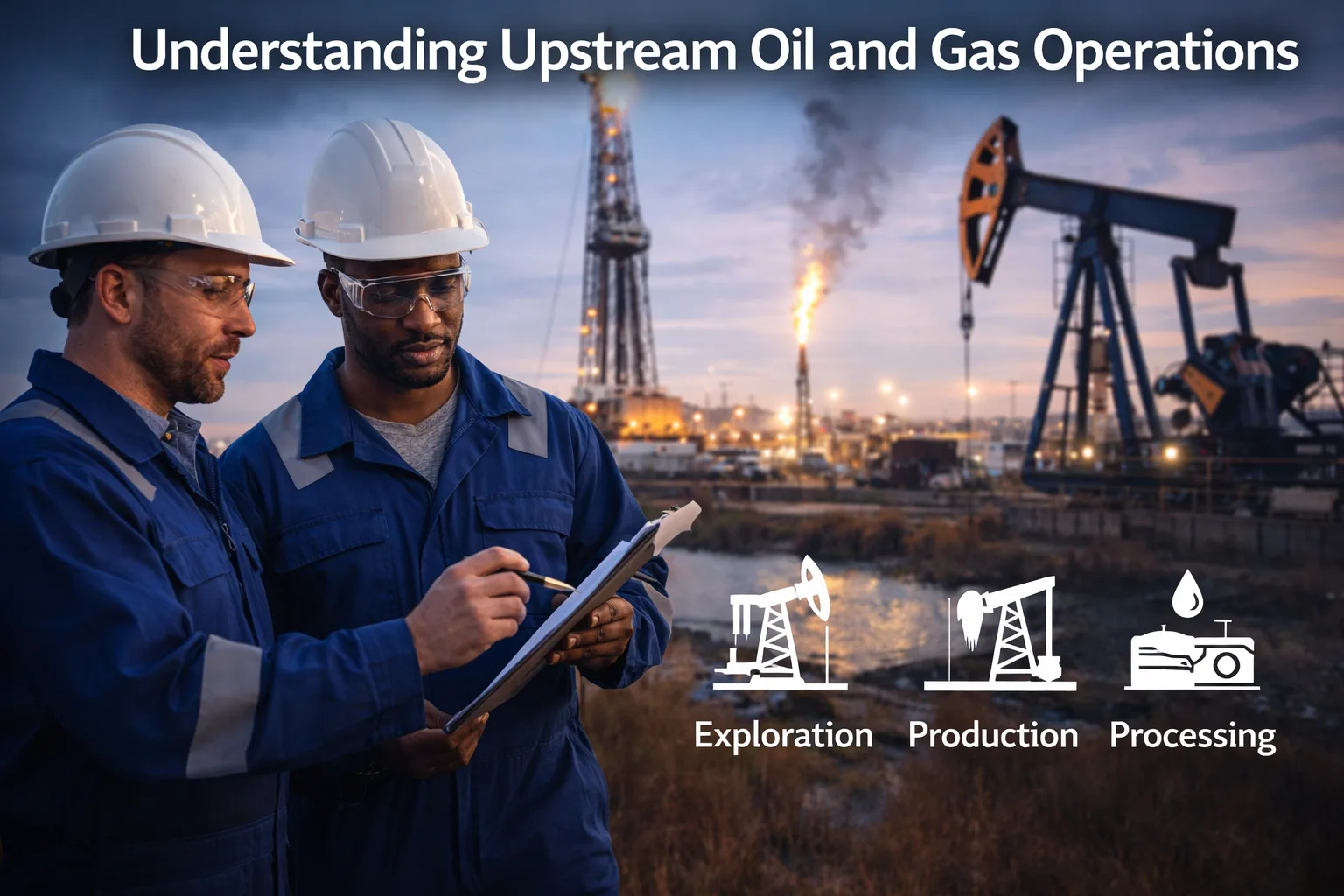
Understanding Upstream Oil and Gas Operations
Operations
The Exploration and Production Phase of the Industry
The oil and gas industry is segmented into three main sectors: upstream, midstream, and downstream. Among these, the upstream sector is where the journey of hydrocarbons begins. This article delves into the intricacies of upstream oil and gas, highlighting its significance, processes, and challenges.
Introduction to Upstream Oil and Gas
Upstream oil and gas, also known as the exploration and production (E&P) sector, encompasses the activities related to the search, recovery, and production of crude oil and natural gas. It is a critical phase in the supply chain that involves geological surveys, exploration drilling, and the extraction of hydrocarbons from beneath the earth’s surface.
The Significance of the Upstream Sector
The upstream sector is pivotal as it lays the foundation for the entire oil and gas industry. The success of exploration and production activities determines the availability of oil and gas resources, which in turn influences energy prices, economic stability, and energy security globally. Furthermore, advancements in upstream technologies have the potential to unlock new reserves, thereby extending the life of mature fields and discovering untapped resources.
Key Processes in Upstream Oil and Gas
Exploration
Exploration is the first critical step in upstream operations. It involves identifying potential hydrocarbon reserves through geological, geophysical, and geochemical surveys. Advanced technologies such as seismic imaging, magnetic surveys, and gravity measurements are employed to create detailed subsurface maps. These maps help geoscientists locate promising drilling sites.
Drilling
Once a prospect is identified, the next step is drilling. Exploration drilling involves penetrating the earth’s crust to reach the potential oil and gas reservoirs. There are two main types of drilling: onshore and offshore. Onshore drilling occurs on land, while offshore drilling takes place in bodies of water, often at great depths. The drilling process requires precision and advanced equipment, including drill rigs, derricks, and drilling mud, which lubricates and cools the drill bit.
Well Completion
After drilling, the well completion phase begins. This process involves preparing the well for production by installing casing, cementing, and perforating the wellbore. Well completion ensures the integrity and safety of the well, preventing any potential leaks or blowouts. Additionally, technologies such as hydraulic fracturing (fracking) and acidizing may be used to enhance the flow of hydrocarbons from the reservoir.
Production
Production is the final phase of upstream operations, where hydrocarbons are extracted from the reservoir and brought to the surface. Production wells are equipped with pumps and other systems to facilitate the flow of oil and gas. The extracted hydrocarbons are then transported to processing facilities for separation and purification before being sent to refineries or distribution networks.
Technological Innovations in the Upstream Sector
The upstream oil and gas industry has witnessed significant technological advancements over the years. Innovations such as horizontal drilling, 3D seismic imaging, and enhanced oil recovery (EOR) techniques have revolutionized the sector. Horizontal drilling allows operators to access multiple reservoirs from a single wellbore, increasing efficiency and reducing environmental impact. 3D seismic imaging provides more accurate subsurface data, enhancing exploration success rates. EOR techniques, including gas injection and thermal recovery, maximize the extraction of hydrocarbons from mature fields.
Challenges in Upstream Oil and Gas
Despite its importance, the upstream sector faces numerous challenges: Environmental Concerns
Environmental impact is a major concern in upstream operations. Drilling, fracking, and production activities can result in habitat disruption, water contamination, and greenhouse gas emissions. The industry is under increasing pressure to adopt sustainable practices and minimize its ecological footprint.
Regulatory Compliance
The upstream sector is heavily regulated to ensure safety, environmental protection, and resource management. Navigating complex regulatory frameworks and obtaining necessary permits can be time-consuming and costly for operators. Non-compliance can result in legal and financial repercussions.
Geological Uncertainties
Exploration involves significant geological uncertainties. Despite advanced technologies, accurately predicting the presence and size of hydrocarbon reserves remains challenging. Dry wells and unproductive drilling campaigns can lead to substantial financial losses.
Market Volatility
The oil and gas market is notoriously volatile, influenced by geopolitical events, supply-demand dynamics, and economic fluctuations. Price instability can impact investment decisions and the profitability of upstream projects.
The Future of Upstream Oil and Gas
The upstream oil and gas sector is poised for transformation as it adapts to evolving energy landscapes and sustainability goals. Investments in renewable energy sources, carbon capture and storage (CCS), and digital technologies are shaping the future of upstream operations.
Companies are increasingly adopting digital twins, artificial intelligence (AI), and data analytics to optimize exploration, production, and maintenance processes.
Furthermore, the transition to cleaner energy sources is prompting upstream companies to diversify their portfolios. Many are investing in natural gas, which is considered a bridge fuel, and exploring opportunities in hydrogen production and offshore wind projects.
Conclusion
Upstream oil and gas operations are the backbone of the energy industry, driving the exploration and production of vital hydrocarbons. While the sector faces challenges related to environmental impact, regulatory compliance, and market volatility, technological innovations and a commitment to sustainability are paving the way for a resilient and responsible future. As the world moves towards a more diversified energy mix, the upstream sector will continue to play a crucial role in meeting global energy demands while striving for a greener and more sustainable tomorrow.