
Article
Why the World Needs International Standards
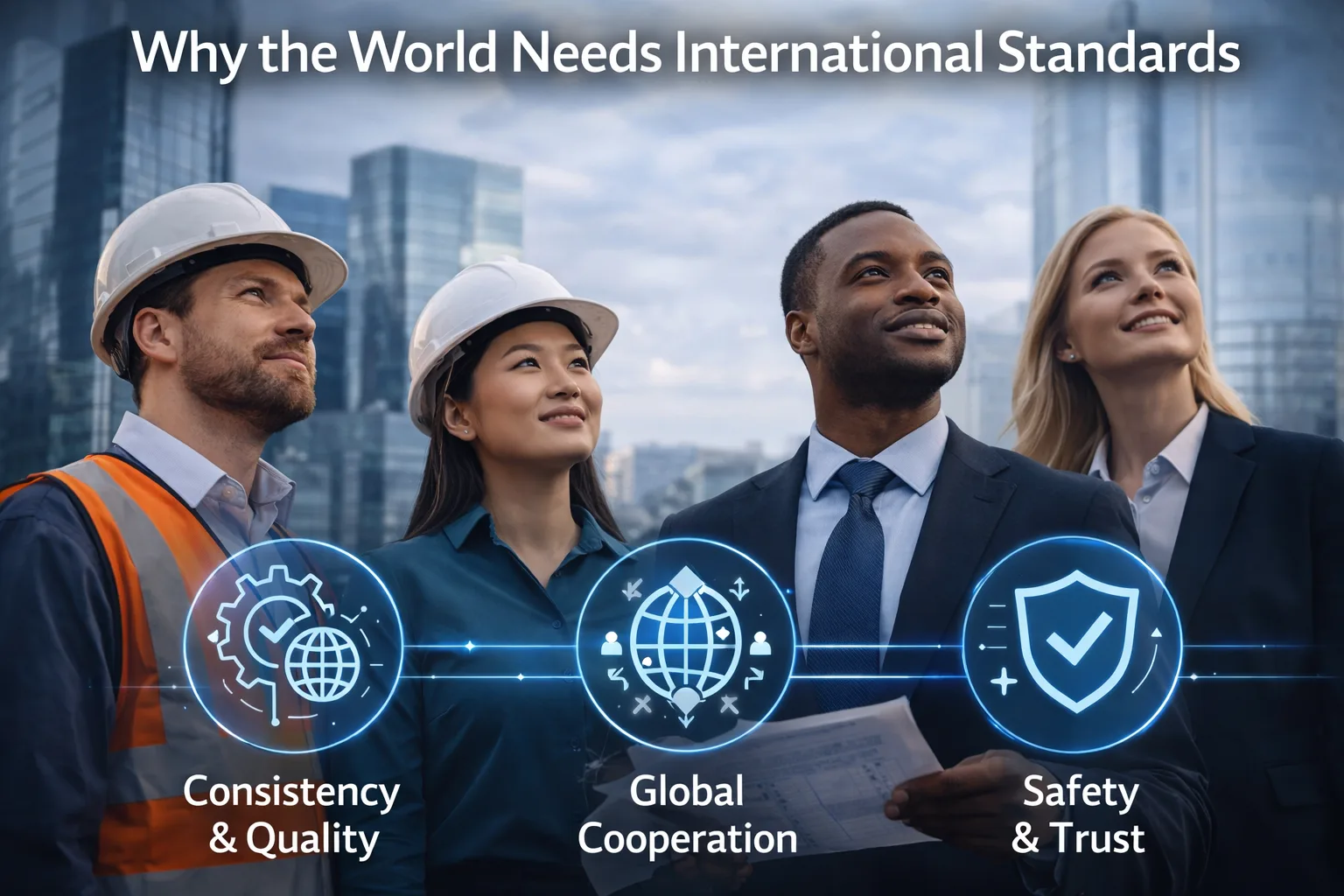
The Importance of Uniformity in Global Processes
In an increasingly interconnected world, the need for international standards has never been more pressing. These standards, which are established by international bodies such as the International Organization for Standardization (ISO) and the International Electrotechnical Commission (IEC), provide a framework for ensuring quality, safety, efficiency, and interoperability across different countries and industries. This article explores the myriad reasons why international standards are indispensable to the modern world.
Facilitating Global Trade
International standards play a crucial role in facilitating global trade. They ensure that products and services meet consistent levels of quality and safety, regardless of where they are produced or consumed. This uniformity reduces the need for multiple tests and certifications, which can be costly and time-consuming. For businesses, adhering to international standards means easier entry into global markets, as their products will already comply with the regulatory requirements of different countries. For consumers, it ensures that they can trust the quality and safety of products from around the world.
Ensuring Safety and Quality
One of the primary purposes of international standards is to ensure the safety and quality of products and services. Standards such as ISO 9001 for quality management systems and ISO 14001 for environmental management systems provide guidelines for organizations to follow, ensuring that their processes meet high standards of quality and safety. This is particularly important in industries such as healthcare, where standards like ISO 13485 ensure that medical devices are safe and effective, and in food production, where standards like ISO 22000 ensure food safety from farm to table.
Promoting Innovation and Efficiency
International standards promote innovation and efficiency by providing a common language and set of expectations for industries. When companies operate under the same standards, it becomes easier to share knowledge, technologies, and best practices. This can lead to more rapid advancements and improvements in products and services. Additionally, standards help streamline processes and reduce waste, leading to greater efficiency. For instance, the ISO 50001 standard for energy management helps organizations improve their energy performance, leading to cost savings and reduced environmental impact.
Supporting Sustainable Development
In the face of global challenges such as climate change, resource depletion, and social inequality, international standards are essential for supporting sustainable development. Standards like ISO 26000 provide guidelines for social responsibility, helping organizations operate in a socially and environmentally responsible manner. The ISO 14000 family of standards for environmental management helps organizations minimize their environmental impact, contributing to the achievement of global sustainability goals. By providing a framework for sustainable practices, international standards help ensure that economic development does not come at the expense of the environment or social equity.
Enhancing Interoperability
In our digital age, interoperability is key to the functioning of complex systems and networks. International standards ensure that different systems, devices, and technologies can work together seamlessly. For example, the ISO/IEC 27001 standard for information security management helps organizations keep their information secure, enabling them to collaborate and share data with confidence. In the realm of telecommunications, standards like those developed by the International Telecommunication Union (ITU) ensure that communication networks can interconnect, facilitating global communication and commerce.
Building Consumer Confidence
Consumers today have access to a vast array of products and services from around the world. International standards help build consumer confidence by ensuring that these products and services meet consistent levels of quality and safety. When consumers see that a product is certified to an international standard, they can trust that it has been tested and meets rigorous criteria. This trust is crucial for the functioning of global markets, as it reduces the risk for consumers and encourages them to purchase products from different countries.
Supporting Regulatory Compliance
International standards also support regulatory compliance by providing a benchmark for laws and regulations. Governments and regulatory bodies often reference international standards when developing new regulations, ensuring that their requirements are in line with global best practices. This harmonization of regulations helps reduce barriers to trade and ensures that compliance with one country’s regulations will often suffice for another’s. For businesses, this means a more straightforward and less costly path to regulatory compliance. Fostering International Cooperation
The development and implementation of international standards foster international cooperation. Experts from around the world come together to develop these standards, sharing their knowledge and expertise to create guidelines that benefit everyone. This collaborative process helps build relationships and trust between countries and organizations, promoting a sense of shared responsibility and common purpose. In a world where global challenges require global solutions, international standards are a key tool for fostering the international cooperation needed to address these issues.
Conclusion
International standards are essential to the functioning of the modern world. They facilitate global trade, ensure safety and quality, promote innovation and efficiency, support sustainable development, enhance interoperability, build consumer confidence, support regulatory compliance, and foster international cooperation. As our world becomes more interconnected and interdependent, the importance of these standards will only continue to grow. By adhering to international standards, we can create a safer, more efficient, and more sustainable world for all.